
Laser Diode Module
635nm 638nm 650nm and 660nm 660nm 670nm 685nm Dot /Line/Cross Line
The Cylindrical Lens laser module uses a precision cylindrical lens to transform a laser beam into a fan-shaped laser line with a specific divergence angle. It is the fundamental and core component for structured light 3D vision systems, providing a uniform, straight line for profiling.


Product Overview
As a premier manufacturer and trusted industrial supplier of advanced optical solutions, we present the Telecentric Uniform Line Laser. Engineered for high-precision machine vision and automated 3D profiling, this module delivers flawless illumination for rigorous inspection demands.
Parallel projection eliminating perspective errors
Ultra-fine constant line width down to 5μm
Comprehensive wavelength options spanning 405nm to 940nm
Exceptional uniformity with < 0.03% straightness deviation
Product Description
The Telecentric Uniform Line Laser represents the pinnacle of optical engineering, crafted specifically for environments where precision is fundamentally required. When integrated into your inspection systems, this laser emits a strikingly crisp, brilliantly defined line of light that cuts through the ambient noise of complex industrial settings. The structural integrity of the laser module feels robust to the touch, housed in a meticulously machined casing designed for optimal thermal dissipation and long-lasting mechanical stability. Unlike standard fan-angle lasers that suffer from edge fading and geometric distortion, this telecentric marvel projects parallel rays, ensuring that the light intensity remains flawlessly consistent from one end of the beam to the other.
Deploying this laser transforms the way your optical sensors capture critical spatial data. The illumination interacts with target surfaces—whether highly reflective machined metals, translucent plastics, or intricate semiconductor wafers—with absolute clarity, casting zero unwanted shadows and revealing microscopic topographical details. The beam's sharp edges and uniform intensity profile mean your industrial cameras capture high-contrast, artifact-free images every single time. By eliminating perspective errors and optical aberrations, this laser module empowers your machinery to perform flawless 3D scanning, dimensional measurement, and surface defect detection, ultimately elevating your production quality and minimizing costly false rejects on the assembly line.
Product Specifications
Our engineering team has meticulously calibrated every technical parameter to ensure seamless integration and unparalleled performance in your high-demand applications. The following table outlines the exact specifications and operational thresholds of the Telecentric Uniform Line Laser.
Parameter | Specification |
|---|---|
Optical Design | Telecentric / Semi-telecentric (parallel projection without divergence angle) |
Line Width / Thickness | Down to 5μm (constant line width) |
Line Length Range | 15mm - 100mm |
Wavelength Range | 405nm - 940nm (covering blue, green, red, and infrared) |
Output Power | Up to 24mW (supports power adjustment) |
Intensity Distribution | High uniform distribution (Uniform intensity profile) |
Straightness Deviation | < 0.03% |
Power Noise | < 0.15% RMS (@<1 MHz, mode-hopping free) |
Modulation | TTL, Reverse TTL, Analog modulation (0-5V) |
Communication Interface | Optional RS232 |
Key Features & Highlights
Engineered to redefine optical measurement standards, this telecentric laser module brings an array of sophisticated advantages to your most challenging inspection tasks. By prioritizing beam integrity and operational stability, it directly addresses the common pain points of machine vision illumination.
Zero Perspective Distortion: The parallel projection mechanism completely eradicates the perspective errors inherent in traditional fan-angle lasers, ensuring exact dimensional accuracy across the entire target surface.
Uncompromising Uniformity: Experience a flawlessly even intensity profile that prevents overexposure in the center and underexposure at the edges, drastically improving image processing algorithms and edge detection.
Microscopic Resolution Capability: With a constant line thickness achievable down to an astonishing 5μm, your scanning equipment can resolve minute defects, micro-scratches, and topographical variations that were previously invisible to standard sensors.
Thermal and Mechanical Stability: Built with premium materials, the module maintains strict optical alignment and consistent power output even in harsh environments characterized by fluctuating temperatures and continuous operational vibrations.
Versatile Wavelength Tuning: The broad spectrum of available wavelengths allows you to perfectly match the laser to the specific absorption and reflection characteristics of your target materials, optimizing the optical return signal.
Advanced Optical Capabilities & Application Benefits
Optical Architecture & Precision
At the core of this module is a highly refined telecentric optical design that projects a parallel laser line with absolutely zero divergence angle. This architectural triumph effectively eliminates the perspective errors and geometric distortions typically caused by standard fan-shaped lasers.
Significantly reduces image shadowing and visual occlusion during complex 3D structured light scanning.
Ensures micron-level data acquisition accuracy on intricate components featuring deep grooves, blind holes, or sudden elevation changes.
Provides a true-to-scale illumination footprint, making software calibration procedures faster and inherently more reliable.
Line Uniformity & Quality
Achieving superior image capture requires an illumination source completely devoid of hot spots or faded extremities. This laser delivers an exceptionally high uniform intensity profile, maintaining a consistent scanning line thickness that can be focused down to 5μm.
Ultra-low straightness deviation (< 0.03%) guarantees a perfectly linear reference baseline for critical geometric measurements.
Advanced field-of-view correction technology eradicates the dreaded "bowtie effect," ensuring edge intensity remains as strong as the center.
Supplies high-end machine vision systems with the stable, consistent illumination required for pixel-perfect edge detection and sub-pixel accuracy.
Depth of Field & Focusing
Overcoming the severe depth-of-field limitations of conventional laser lines, this module offers versatile focusing options tailored to your specific operational scale. Whether you require micro-focusing for ultra-fine lines or macro-focusing for expansive depth, the optics deliver.
Maintains a constant, micron-level line width over extended working distances, reducing the need for constant mechanical repositioning.
Preserves maximum optical contrast across a remarkably wide field of view, ensuring clarity from the foreground to the background.
Flexibly adapts to varying target heights and undulating surfaces without sacrificing measurement precision or line sharpness.
Signal Stability & Low Noise
Electrical noise and mode-hopping can devastate the accuracy of precision measurements by creating unpredictable fluctuations in light output. This unit is fortified with premium RF-modulation drive electronics, ensuring an incredibly pure and stable light emission.
Achieves ultra-low power noise of < 0.15% RMS, guaranteeing a seamlessly smooth, mode-hopping free operation.
Dramatically reduces speckle contrast, resulting in a cleaner, sharper line even when projected onto rough or highly textured surfaces.
Serves as the ideal, pristine light source for high-precision semiconductor inspection, particle sizing, and highly sensitive biomedical instrumentation.
Wavelength & Power Adaptability
Material interaction dictates optical success. By offering a comprehensive spectrum of wavelengths from 405nm to 940nm, coupled with adjustable output power up to 24mW, this laser adapts seamlessly to diverse inspection scenarios and material properties.
Blue light options (e.g., 405nm) cut through highly reflective metals or transparent polymers with ease, minimizing subsurface scattering.
Green light variants provide exceptional visibility and contrast for specialized surface profiling and hot-metal inspections.
Infrared and red options cater perfectly to specific industrial camera spectral sensitivities, optimizing sensor response and reducing ambient light interference.
System Integration & Control
Modern automated production lines demand components that are as intelligent as they are precise. The compact, modular design of this telecentric laser ensures it can be effortlessly embedded into sophisticated 3D profilers and automated inspection stations.
Supports multiple external trigger and modulation protocols, including TTL, Reverse TTL, and 0-5V analog signals for synchronized image capture.
Optional RS232 communication interface enables seamless data exchange, remote parameter adjustments, and integrated system diagnostics.
Facilitates smart control, real-time status reading, and predictive maintenance protocols for large-scale production facilities and complex integration projects.
Why Partner With Us
Selecting the right optical components is a critical decision that impacts the entire lifecycle of your inspection systems. As a dedicated manufacturer and global supplier, we bring decades of photonics expertise directly to your production floor. We do not just supply parts; we deliver engineered solutions designed to elevate your operational capabilities and safeguard your quality control processes.
Uncompromising Quality Assurance: Every laser module undergoes rigorous interferometric testing and environmental stress screening before it leaves our facility, ensuring out-of-the-box perfection and long-term reliability.
Expert Engineering Support: Our team of optical engineers works closely with your integration specialists to provide tailored advice on wavelength selection, focal lengths, and complex modulation setups.
Scalable Manufacturing Capacity: Whether you require a single prototype for a new R&D project or a high-volume rollout for a global factory network, our agile production lines guarantee timely and consistent delivery.
Continuous Innovation: We heavily invest in optical research, constantly refining our telecentric designs to push the boundaries of line thinness, uniformity, and electronic stability, keeping your systems ahead of the technological curve.
Frequently Asked Questions (FAQ)
What makes a telecentric line laser superior to a standard fan-angle laser?
A telecentric laser uses advanced optics to project parallel light rays, meaning the beam does not diverge or spread out as it travels away from the source. This parallel projection entirely eliminates perspective distortion and shadowing. It ensures that the laser line remains perfectly uniform in thickness and intensity across the entire target, which is an absolute necessity for high-accuracy 3D profiling and volumetric measurements.
How does the < 0.15% RMS power noise benefit my measurement system?
Power noise translates directly to rapid, unpredictable fluctuations in light intensity. By keeping the noise below 0.15% RMS and ensuring mode-hopping free operation, the laser provides a highly stable, continuous illumination source. This allows your camera sensors to capture images with consistent exposure frame after frame, drastically reducing software processing errors and vastly improving the repeatability of your automated measurements.
Can I adjust the laser output power for different materials on the same line?
Yes, the module supports precise power adjustment up to its maximum output of 24mW. Furthermore, it features versatile modulation options including TTL, Reverse TTL, and 0-5V Analog modulation. This allows your central control system to dynamically scale the intensity in real-time to prevent sensor blooming on highly reflective metallic surfaces, or to increase brightness when scanning dark, light-absorbing materials.
What is the advantage of utilizing the optional RS232 communication interface?
The RS232 interface transforms the laser from a passive illumination component into a smart, communicative device. It allows your central control architecture to digitally monitor the laser's operational status, adjust output parameters on the fly, and implement predictive maintenance strategies by tracking usage hours, temperature variations, and electrical health, thereby preventing unexpected downtime.
How do I choose the correct wavelength for my specific inspection application?
Wavelength selection depends heavily on the target material's optical properties and your camera sensor's quantum efficiency. We offer a full spectrum from 405nm to 940nm. For instance, 405nm (blue light) is highly effective for scanning translucent plastics or highly polished metals due to its shorter wavelength and lower surface penetration. Red or infrared wavelengths are often chosen to match the peak sensitivity of specific monochrome industrial sensors. Our engineering team is always available to analyze your specific use case and recommend the optimal spectrum.
| Parameter Category | Parameter Name | Parameter Value |
| Optical | Wavelength(nm) | 405-980 |
| Power(mw) | 30~2000 | |
| Power Stability | <5% | |
| Fan Angle | 15, 30, 45, 60, 75 | |
| Line Thickness (1/e2)(μm) | 10~2000 | |
| Working Distance (mm) | 10~5000 | |
| Line Straightness | <0.05% | |
| Gaussian | >90% | |
| Line Uniformity | ≥85% | |
| Electrical | Input Voltage (Vdc) | 5-24 DC |
| Operating Current (mA) | <500 | |
| TTL Operating Voltage | Ov Off, 3.3v On | |
| Modulation Frequency (Khz) | <30 | |
| Start Time | - | |
| Analog Modulation | 0~3V; 3v Max, Ov Off | |
| Over Current Protection | Yes | |
| ESD Protection | Yes | |
| Connector Type | - | |
| MTTF (hrs) | >15000 | |
| Machinery | Size | - |
| External Material | Aluminium | |
| Protection Class | - | |
| Environment | Operating Temperature (℃) | -10~+70 |
| Storage Temperature(℃) | -40~+80 |
(TC=25 ° C, unless otherwise specified)
Product Features
-

Line Generation
The core function of transforming a point source into a high-quality laser line or laser fan.
-

High Line Quality
Produces a laser line with excellent uniformity, straightness, and sharp edges.
-
Selectable Angles
Available in a range of fan angles (e.g., 30°, 45°, 60°, 90°) to suit different field-of-view requirements.
Main purpose
-
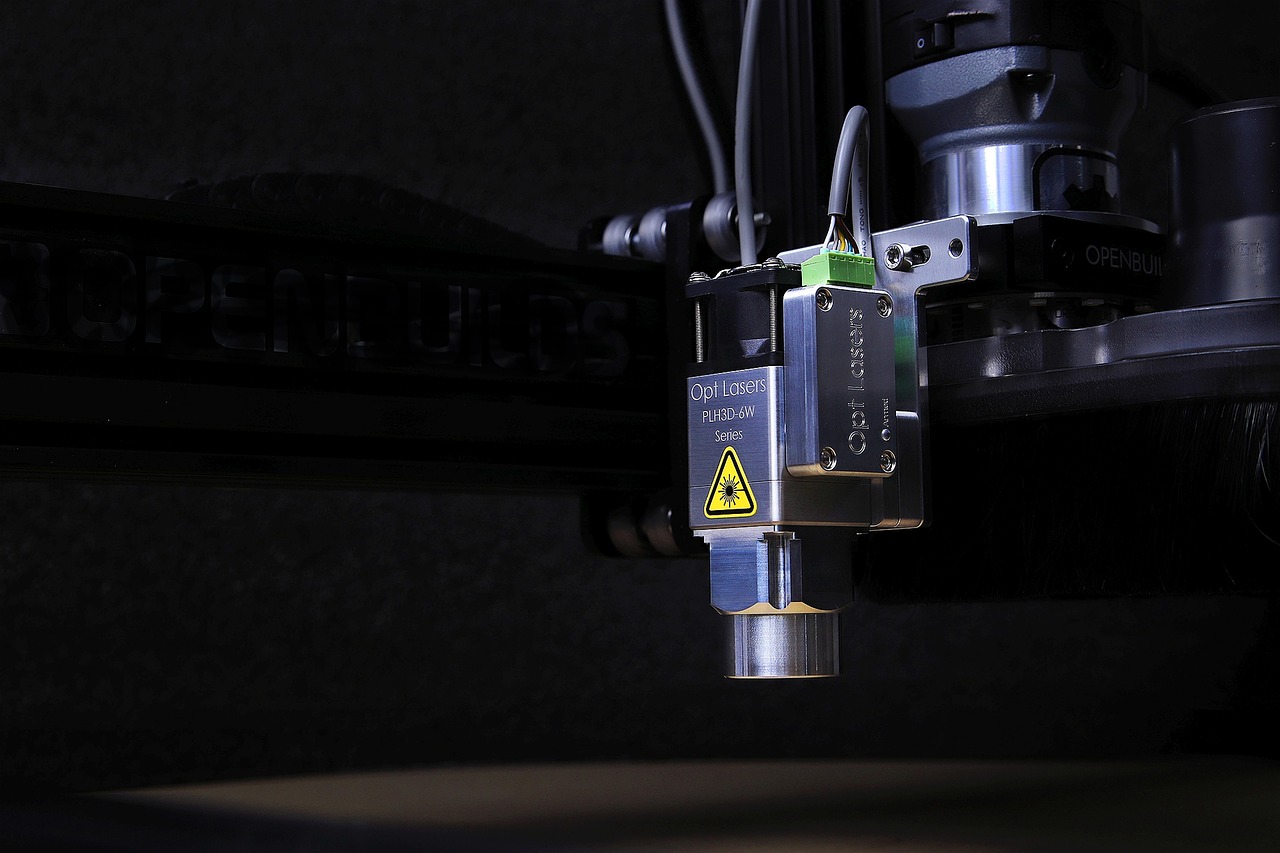
3D Profiling / Laser Triangulation
-

Surface flatness and warpage inspection
-
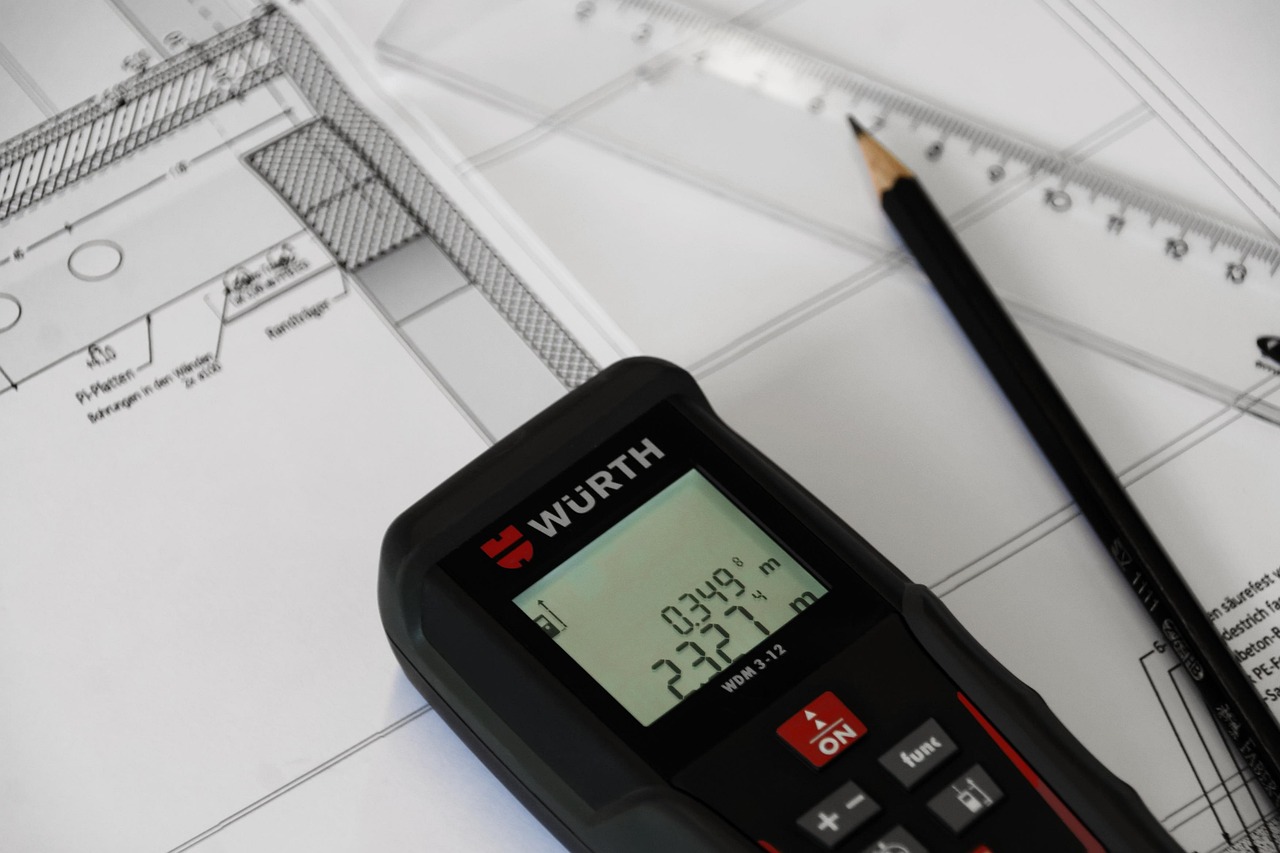
Weld seam tracking and guidance
Note:
※Contact us for tailored solutions – we’ll provide quotes within 48 hours.
※Contact our engineering team for tailored solutions! We provide:
Free technical consultation Volume production support
Related Products
-
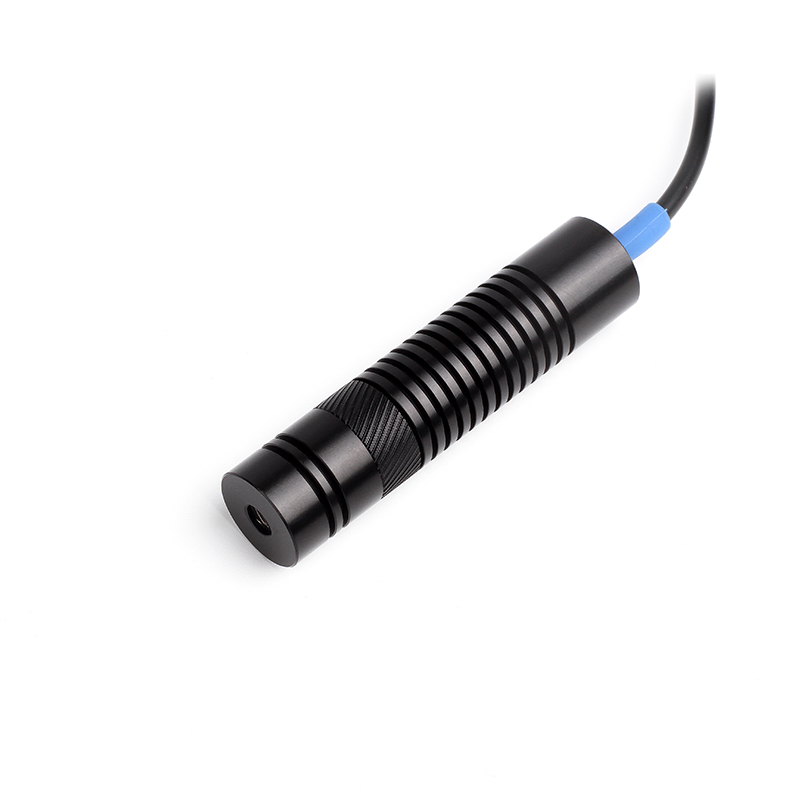 High uniformity, excellent straightness, wide wavelength & fan angle selection.The Uniform Line Laser delivers exceptional beam uniformity and straightness for precision alignment and machine vision applications. With a wide wavelength range from 405 to 980 nm and selectable fan angles, this compact laser module provides reliable, high-performance line projection for industrial integration.
- Wavelength: 405-980 nm with output power from 10 to 200 mW
- Fan angle options: 15°, 30°, 45°, 60°, 75°, 90°, and 110°
- Line uniformity ≥ 80% with straightness of 0.05% and working distance up to 2000 mm
- Input voltage: 5-24 Vdc with CW, TTL, or analog modulation; service life up to 15,000 hours
